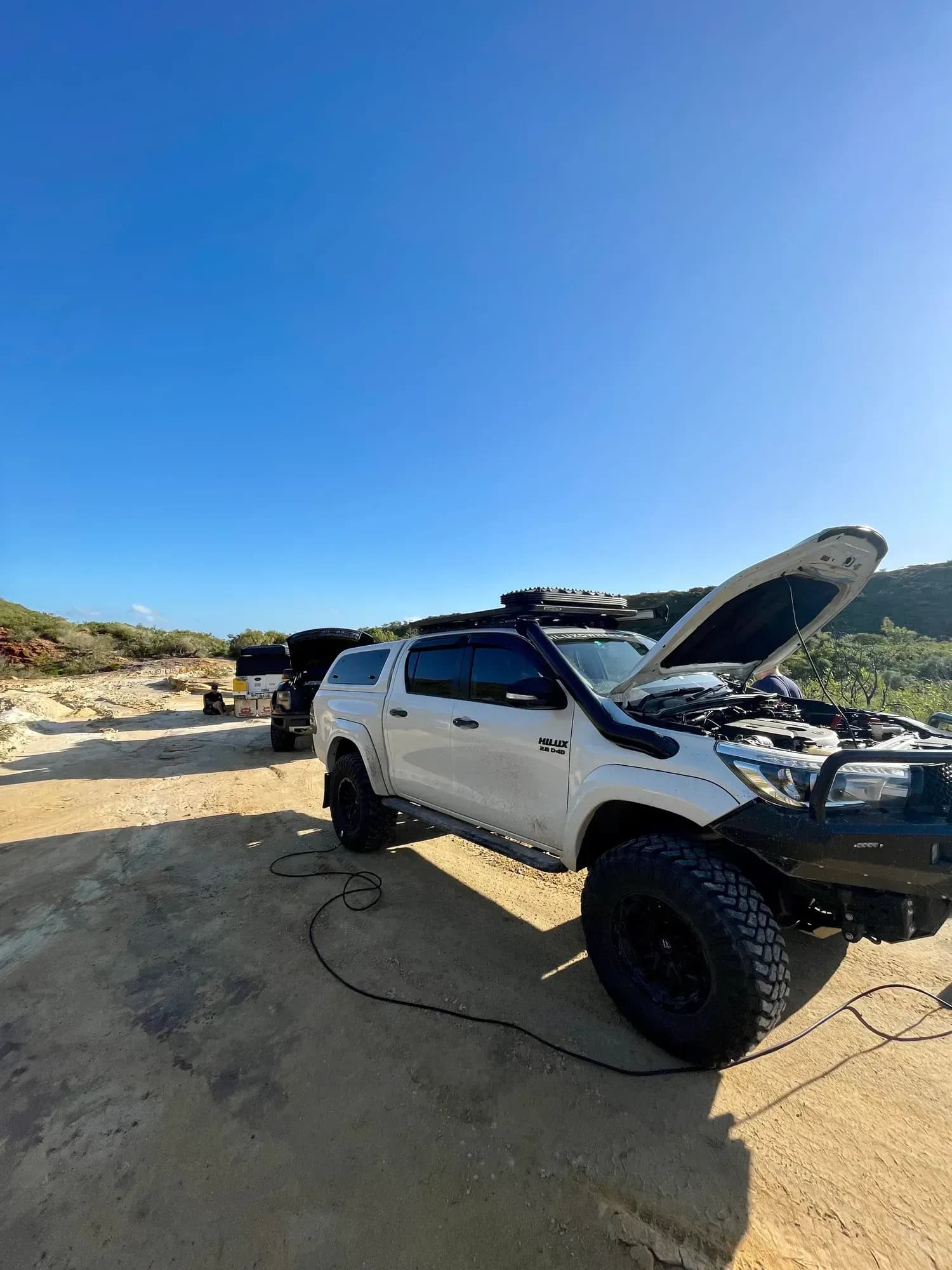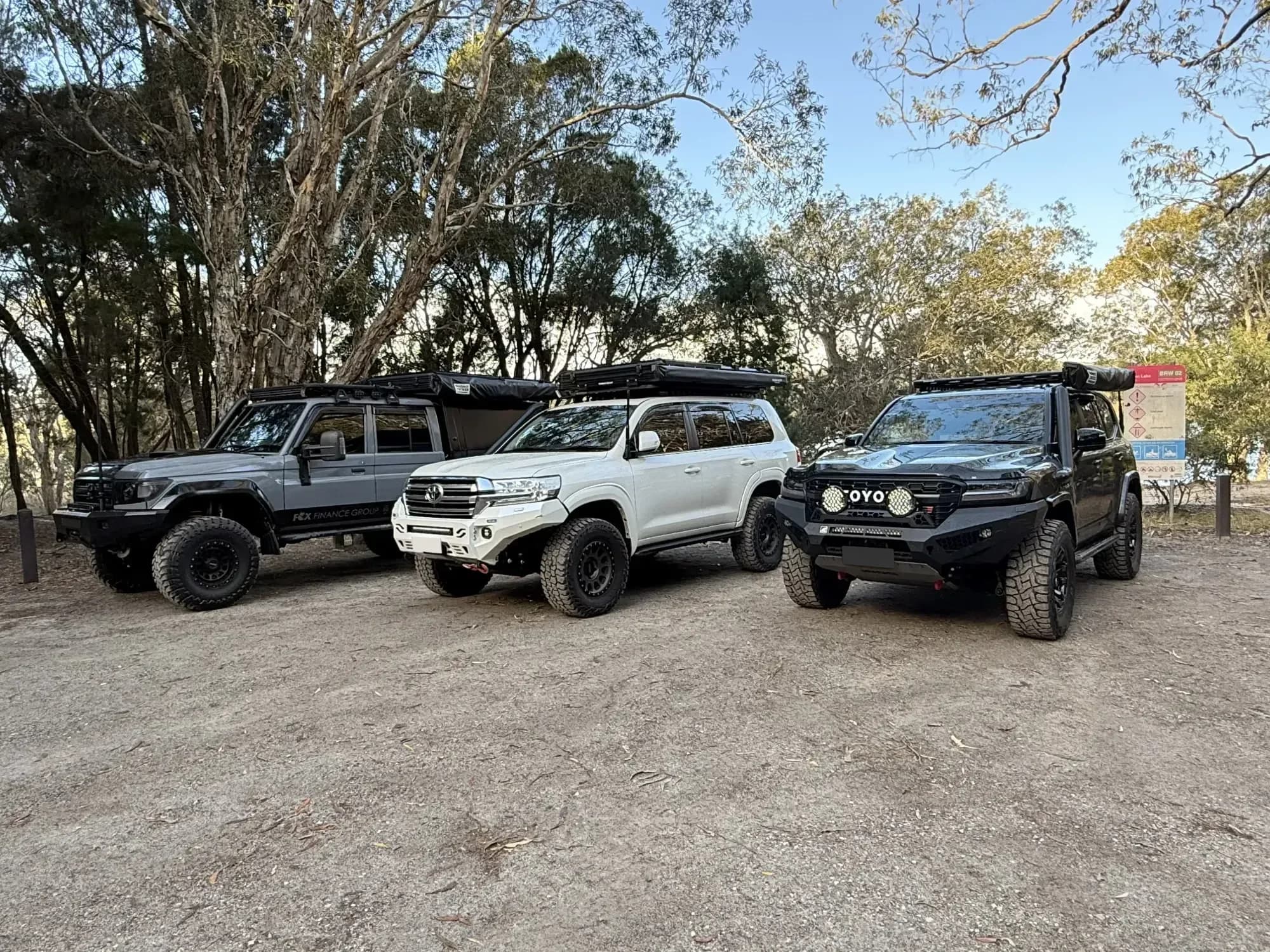
Building a 79 Series Canopy Setup in Stages
Start with the tray, add the drawers, finish with the fridge slide. Why a staged build usually beats a big-bang one.
The 79 Series is a blank page. It comes from the factory as a tough, honest ute, and what you build on the back of it says everything about how you travel.
The temptation is to draw up the whole dream setup on day one and order every part at once. A staged build is quieter, cheaper on the nerves, and usually produces a better result.
Stage one: get the foundation right
Everything sits on the tray, so the tray comes first. Think about how the vehicle will be used before you think about how it will look. A rig that tows a lot needs different weight distribution than one that lives on sand.
A workshop hoist is where the plan gets honest. Once the vehicle is up and the parts are laid out on the floor, the gaps in your list show up quickly.
Stage two: storage that works at 6am
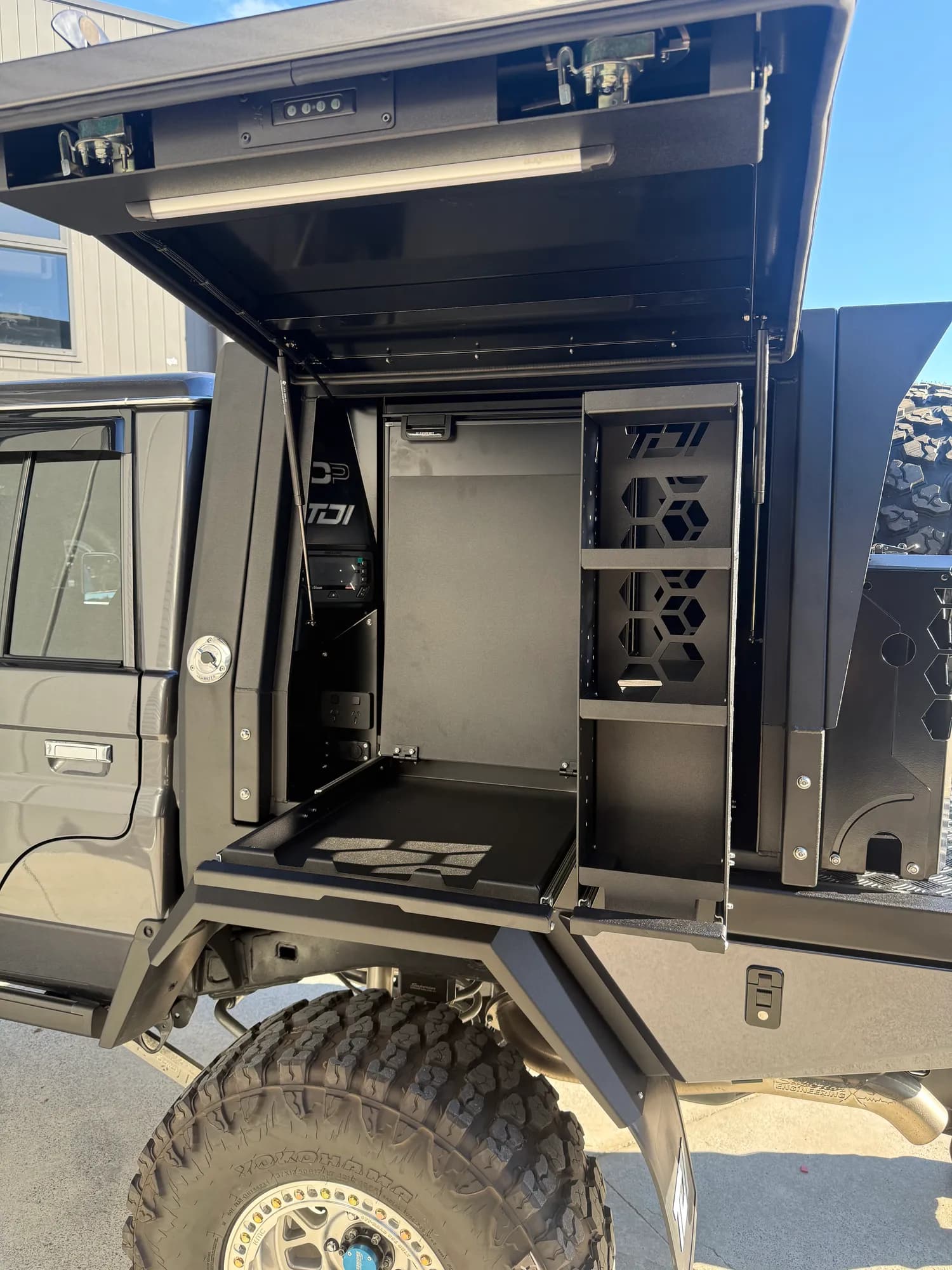
Drawers and slides are where a build starts earning its keep. The test is simple: can you find the kettle in the half-dark before the coffee has kicked in?
- Heavy items low and close to the axle
- Daily-use gear at waist height, not on the floor
- Recovery gear reachable from outside, with nothing stacked on top
- A clear spot for every cable, plug and charger
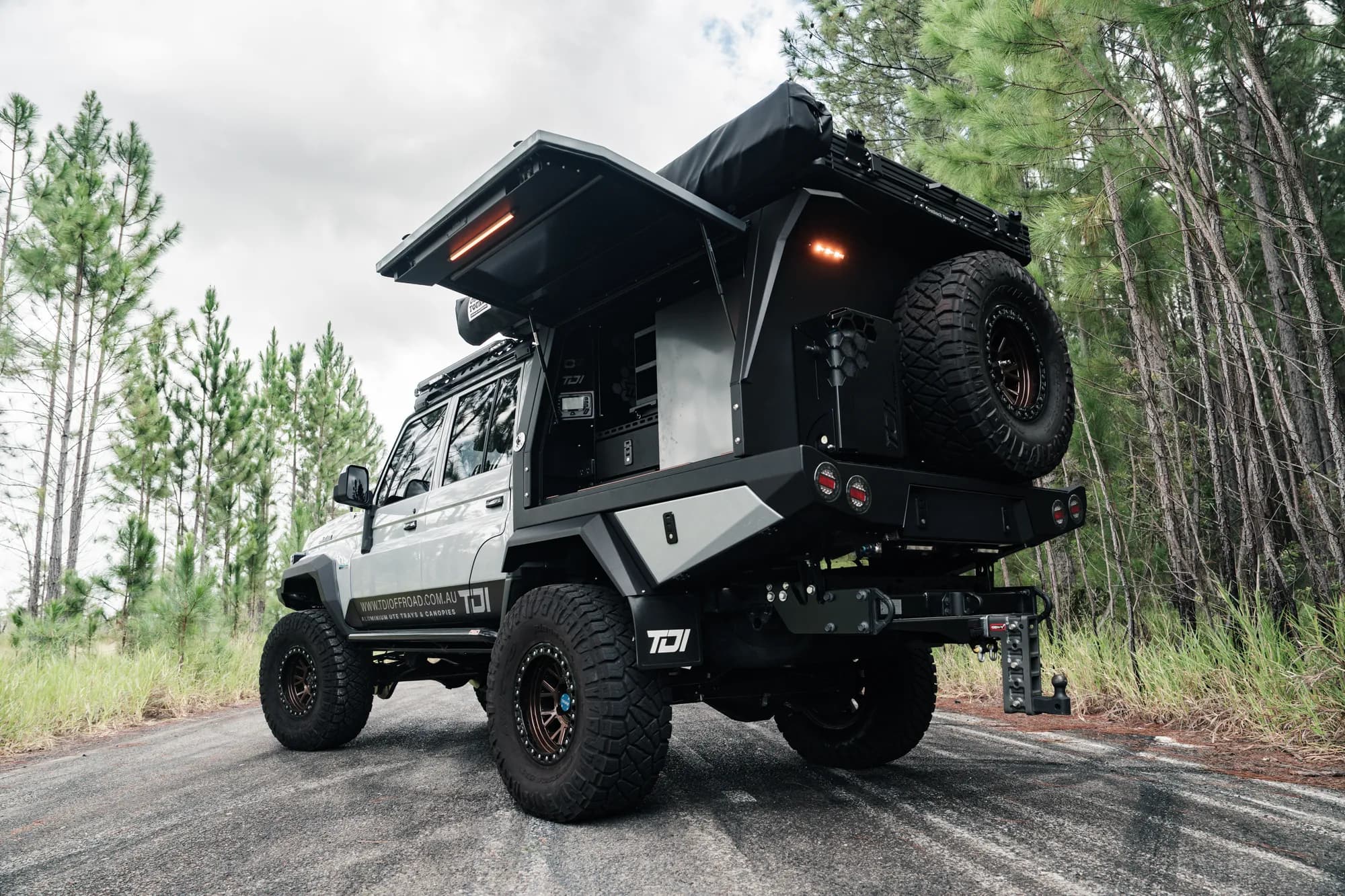
Stage three: the comfort layer
This is the fun part, and also the part to take slowly. Lighting, power outlets, a fridge that sits at the right height, a bench that folds out when you need it.
By now you have driven the rig loaded and know what annoys you. Maybe the fridge needs to slide further. Maybe the lights need to point somewhere else. Stage three is where those lessons turn into fittings.
Why staging usually wins
First, you learn as you go. Three months of weekend trips teach you more about your setup than three months of reading forums.
Second, you can change your mind. If a part does not suit, you find out before the whole build depends on it.
Third, it gives you a rhythm. Each stage has a finish line, and finishing things is what keeps a build from stalling halfway.
A good build is never really finished. It just gets to the point where it stops getting in your way.
From the team
Mapping it out before the first bolt
Write the whole plan down, then cut it into stages. Put the must-haves first and the nice-to-haves last. Talk to your workshop about the order, because the right sequence saves rework.
If you would rather spread the cost of the build, finance is one option to look at once you have the plan on paper. Having the stages mapped makes that conversation far easier.
Then it is just a matter of picking a start date. The first stage is the hardest, and also the most satisfying.
There is a lot to be said for the day you collect the vehicle after stage one. It looks the same from the driveway, but it drives differently, and you start seeing the next stage in your head. Before long you are planning the first proper trip with it, and the build has already paid you back in the only currency that counts.
Keep a notebook in the glovebox. Write down what annoys you on each trip, and what you reached for and could not find. By the next stage you will have a list no catalogue could write for you, and the finished setup will fit your trips instead of a generic template.