A Day in the Workshop: Why Suspension Comes Before Everything
Before the roof rack and the fridge, the ride. What happens on the hoist during a suspension upgrade, and why it changes every trip.
Ask a dozen experienced travellers what they would upgrade first and a surprising number say the same thing: suspension. Not the flashy bits. The part that carries everything else.
Here is what a suspension day looks like in the workshop, and why it makes such a difference once the weight goes on.
Up on the hoist, wheels off
It starts with the wheels coming off and the vehicle going up. That is when you see what the factory setup has been quietly doing: worn bushes, tired shocks, springs that have sagged under years of daily driving.
A good workshop will walk you through what they find before a single part is ordered. Ask to see the old components. It is a quick way to understand what the vehicle has been putting up with.
Matching the setup to the load
The best suspension is not the most expensive or the stiffest. It is the one matched to what your vehicle really carries. A rig that tows a camper every month needs something different from one that carries a canopy and a fridge.
Be specific when you talk to the workshop. Tell them everything you plan to add, including the parts you have not bought yet. The more accurate the picture, the better the result.
- What the vehicle carries on a typical trip, fully loaded
- Whether you tow, and what you tow
- The roads you drive: corrugations, sand, bitumen or a mix
- Any accessories still to come, like bars, canopies or extra tanks
What changes on the road
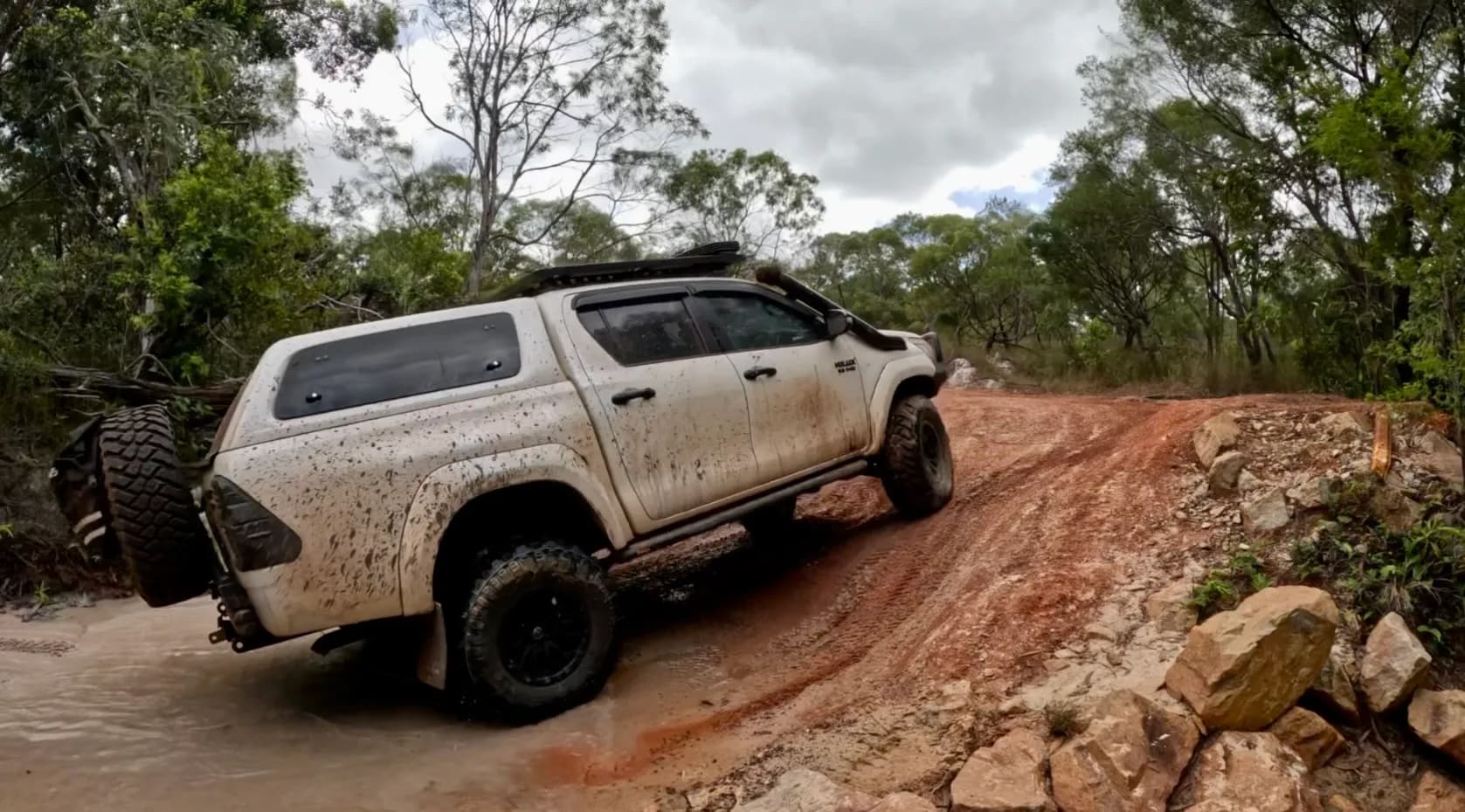
The first drive after an upgrade is the moment it all makes sense. The vehicle sits level. It stops wallowing on corrugations. It tracks straight on a long dirt road, even with the whole kit on board.
Long days feel shorter when the vehicle is not working against itself. That is the real return: not a number on a spec sheet, but how you feel at the end of a big day behind the wheel.
Why it goes first
Fit the canopy first and the weight goes onto suspension that was not designed for it. Fit the suspension first and every later addition lands on a stable base.
Do the boring parts first. The exciting parts will still be there.
From the team
Planning the order
If a full build feels like a lot, start with the ride and add the rest as you go. Many people find that mapping the stages and then looking at finance for the first one is a calm way to get moving.
Whichever way you go, book the workshop, bring your list, and ask plenty of questions. The best builds start with a good conversation.
The best part of a workshop day is the drive home. Take the long way. Find a rough bit of road and feel what the vehicle does now compared with what it did that morning. That quiet moment, when the rig stops fighting you, is usually the moment people start planning the next trip.